





















The Untold Truth Behind the Legend
The All-American Girls Professional Baseball League

For those who came of age in the 1990s, A League of Their Own occupies a singular place in cultural memory its sharp dialogue, vibrant characters, and infectious energy cementing it as one of the decade’s most beloved films. Yet beneath Hollywood’s carefully constructed narrative lies a historical reality that is, in many respects, more compelling than the fiction it inspired. The All-American Girls Professional Baseball League was no mere cinematic invention. It was a genuine social phenomenon, an athletic institution of remarkable caliber, and an inadvertent catalyst for the renegotiation of gender boundaries in mid-twentieth-century America.
The Wartime Calculus That Created a Revolution
To appreciate the league’s origins, one must first reckon with the particular anxieties of 1943. The United States was fully mobilized for war, and the machinery of American civilian life had been profoundly disrupted. Major League Baseball, long considered the spiritual heartbeat of the nation, faced an existential crisis: its rosters had been decimated by conscription, its stadiums half-empty, its future genuinely uncertain.
It was Philip K. Wrigley chewing gum magnate, owner of the Chicago Cubs, and shrewd commercial operator who conceived of a solution both audacious and, in its original intent, entirely pragmatic. His motivation was not progressive ideology but commercial survival: fill the bleachers, sustain public interest, protect the sport’s economic infrastructure while its male stars fought overseas. What he could not have anticipated was that his utilitarian gambit would produce something far more enduring.
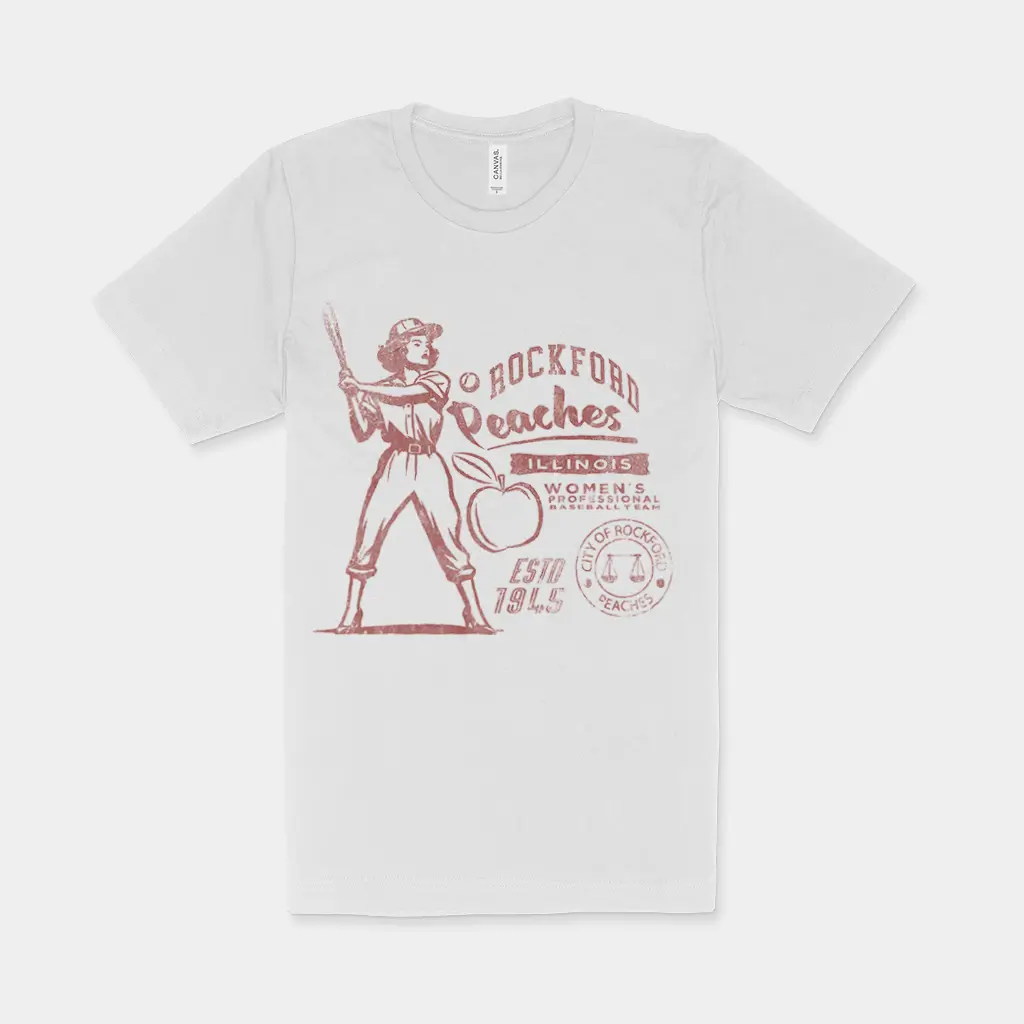
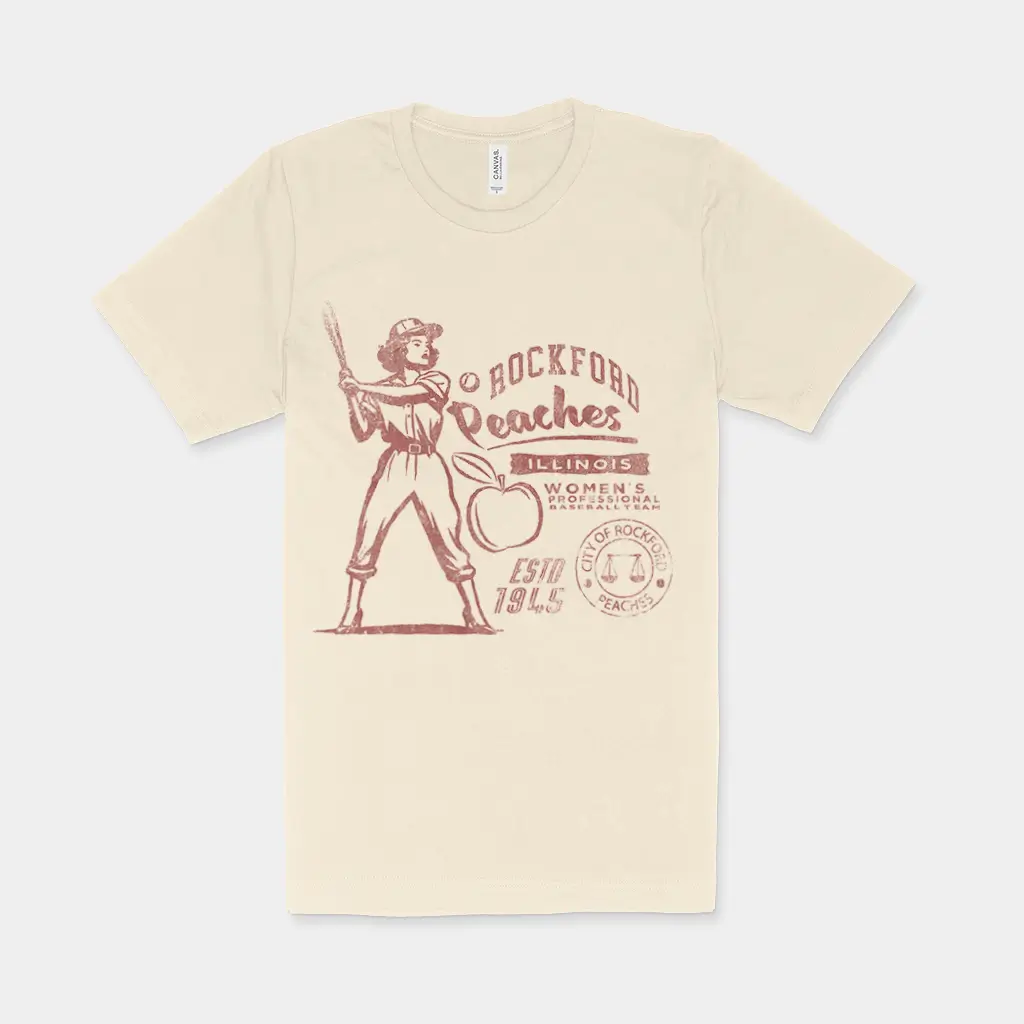
The league launched with four franchises the Racine Belles, the Kenosha Comets, the South Bend Blue Sox, and the Rockford Peaches and scouts fanned out across the continent in search of exceptional female athletes. The talent pool they discovered was vast and largely invisible to mainstream sporting culture, women who had been honing their abilities in near-total obscurity, awaiting precisely such an opportunity.
The Impossible Bargain, Athletic Excellence Under the Veil of Femininity
Perhaps no aspect of the AAGPBL’s history better illustrates the contradictions of its era than the rigid code of conduct imposed upon its players. Wrigley, acutely aware of prevailing cultural anxieties surrounding female athleticism, was determined to preempt any suggestion that these women were insufficiently feminine. The result was a set of requirements as remarkable for their absurdity as for what they reveal about the period.
Prior to each season, players were compelled to attend a charm school overseen by cosmetics authority Helena Rubinstein, where they received instruction in deportment, grooming, and social etiquette. Lipstick was mandatory. Hair, however inconveniently, was to remain styled. Their uniforms short-skirted tunics worn over shorts, paired with high socks were designed to signal elegance rather than functionality, a decision that produced immediate and painful consequences on the field.
Sliding into base in a skirt was not merely impractical; it was genuinely injurious. Players routinely sustained deep abrasions the notorious “strawberries” on their thighs and calves, battle scars they bore without complaint. That these women absorbed such physical punishment while simultaneously maintaining the cosmetic standards demanded of them speaks to a particular form of resilience: the capacity to excel within constraints designed to diminish you.
The Athletes, A Talent That History Failed to Honor
The AAGPBL was not, by any measure, a novelty act. The caliber of play it produced was, by contemporary accounts, genuinely extraordinary. Dottie Kamenshek first baseman for the Rockford Peaches and one of the league’s most decorated players drew admiring comparisons from none other than Hank Aaron, who reportedly considered her among the finest athletes he had ever witnessed. Her combination of defensive precision and batting consistency made her a figure who, had circumstances been different, might have competed comfortably in men’s professional baseball.
Sophie Kurys, whose stolen base record endured for decades, played with an aggression and cunning on the basepaths that bordered on the poetic. Betty Foss, a two-time batting champion in 1952 and 1953, exemplified the league’s consistent elevation of its competitive standards. As the years progressed, the AAGPBL migrated incrementally from softball toward hardball, tightening pitching distances and adopting rules that brought it ever closer to the men’s game a deliberate evolution that placed increasing technical demands on its players and which they met without hesitation.
Triumph, Neglect, and the Cruelty of Forgetting
The league reached its commercial and athletic apex in 1948, when attendance surpassed one million spectators a figure that made manifest what its founders had perhaps underestimated: that women’s baseball, given the opportunity, could sustain itself as genuine entertainment and genuine sport simultaneously.
The postwar years, however, brought forces the league could not withstand. The return of male players from overseas restored Major League Baseball to its customary dominance. Television began reshaping leisure culture in ways that drew audiences away from local sporting events. The financial pressures on franchise owners mounted steadily. In 1954, after twelve seasons that had altered, however quietly, the landscape of American sport and society, the AAGPBL disbanded. Its players returned to private life, their achievements largely unacknowledged, their names absent from the canonical histories of the game they had served so brilliantly.
For nearly four decades, this silence held.
Reclamation, How Cinema Restored a Stolen Legacy
It fell to director Penny Marshall, in 1992, to restore these women to public consciousness. A League of Their Own, featuring a cast that included Tom Hanks, Geena Davis, Lori Petty, and Madonna, reached audiences with a force that no academic monograph or archival exhibition could have replicated. The film did not merely entertain; it rehabilitated. It located the surviving players, drew them back into the public eye, and offered them at last, and belatedly the recognition that history had withheld.
The film’s cultural impact extended beyond sentiment. It directly contributed to the establishment of the Women in Baseball permanent exhibit at the National Baseball Hall of Fame and Museum in Cooperstown, an institutional acknowledgment, however long overdue, that women’s contributions to the sport merited preservation and commemoration.
The legacy of the AAGPBL resists easy reduction to a single narrative. It is, simultaneously, a story of commercial opportunism that became something noble, of athletic achievement that flourished in defiance of the conditions designed to contain it, and of a historical erasure that was only partially corrected by a Hollywood production half a century later. These women did not merely fill a wartime void. They demonstrated, with considerable eloquence, that excellence on a baseball diamond is not a function of gender and that the world’s failure to recognize that truth for so long reflects not on them, but on the narrowness of the world.